What Makes Vinyl Record Prices Fluctuate in Secondhand Markets
 John Zimmerman, Vinyl Expert
September 26th, 2026
7 min read
You're browsing Discogs and spot the same album listed three times: $12, $47, and $180. Same artist. Same album. Same era. The price differences feel arbitrary until you realize each copy represents a different pressing, condition grade, and market moment.
The framework for thinking about vinyl secondhand pricing
Secondhand vinyl prices move on three primary axes: scarcity (how many copies exist), condition (what state the record is in), and demand (who wants it and when). "Unlike new vinyl pressings which have fixed retail prices, secondhand vinyl values fluctuate based on rarity, condition, pressing details, and collect…" [6] A record's value depends less on artistic merit than on these measurable physical and market factors. Understanding which lever moves price most dramatically in a given moment separates informed buyers from those caught paying premium markups for common variants.
Scarcity: pressing runs and variant rarity
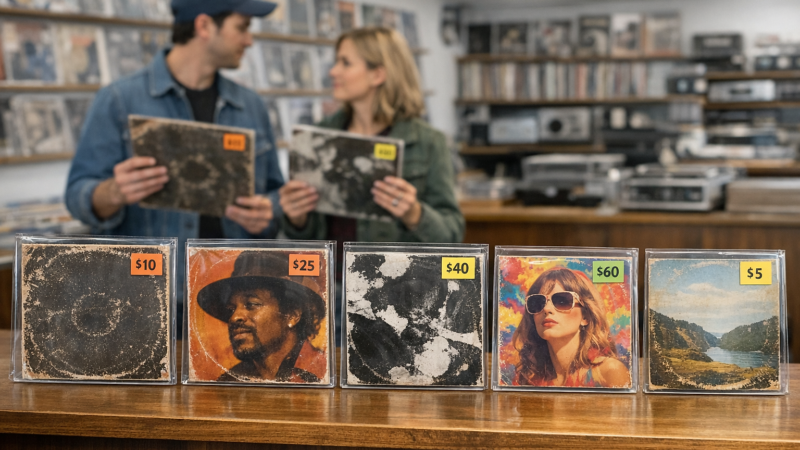
A record pressed in 500,000 copies will almost never command high prices, no matter its age or cultural significance. "There is no exact rule, but generally speaking, a record that was pressed at millions copies will never cost a lot…" [1] Conversely, limited editions, promotional pressings, and region-specific releases create artificial scarcity. A first pressing of an album on colored vinyl might sell for $25, while the standard black variant of the same pressing costs $8. Original 1970s pressings of cult albums often trade at $300 to $1,500 because pressing runs were small and decades of wear have eliminated most copies in playable condition.
Discogs users filter by pressing identifier (catalog number, matrix code, color, and jacket variation) precisely because these attributes drive price gaps. A Japanese import pressing of a Western release, for instance, might be rarer and command 40% more than the domestic variant, even if the music is identical. Record store buyers like those at Crazyforvinyl.com track pressing history obsessively because variant knowledge directly translates to pricing authority.
Condition grading: the hidden multiplier
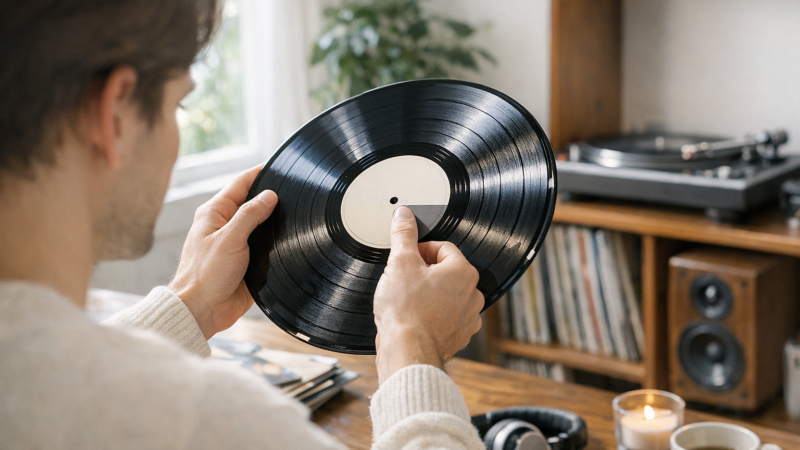
Record condition determines whether a $500 album sells for $200 or $450. Industry standard grades run from Mint (never played) to Poor (significant damage), with intermediate grades like Near Mint, Very Good Plus, and Good marking functional deterioration. A record in Mint condition might fetch 3x the price of the same pressing in Very Good condition, because collectors view unplayed copies as investments and playable copies as consumables. Sleeve condition adds another layer; jacket wear, stickers, and markings can cut value by 20% to 50% independent of the vinyl itself.
As of Q1 2026, condition grading remains partly subjective across platforms. One seller's "Very Good Plus" may be another's "Good." This ambiguity creates price arbitrage opportunities; records listed aggressively (claiming higher condition than defensible) often languish unsold, while accurately graded copies move quickly at modest premiums.
Demand: artist trends and collector appetite
A reissue campaign, a documentary, or a chart resurgence can double a record's price in weeks. When a hip-hop producer samples a 1980s funk album, collectors scramble for original pressings, pushing prices up 60% to 150% overnight. Conversely, a market glut of reissues (cheap new copies of classics) can depress original pressing values by normalizing access. Death of an artist often triggers brief spikes, followed by stabilization as the initial rush subsides.
Genre and cultural moment matter enormously. Jazz and soul records experience cyclical demand tied to sampling trends and playlist curation. Indie rock has softened in collector appetite since 2023, while K-pop and vaporwave vinyl remain strong. A record that cost $40 three years ago might sell for $22 today purely because fewer collectors are hunting it.
Case in point: Pink Floyd's The Wall (1979)
The original pressing of The Wall exists in dozens of variants across regions and pressings. A sealed first edition on the original Harvest label fetches $800 to $1,200. A played copy in Very Good condition costs $30 to $60. A 2012 remaster reissue sells new for $25. The same album; three entirely different price tiers driven by scarcity (sealed originals are rare), condition (played records degrade), and demand (collectors prefer originals over reissues, but casual listeners buy reissues). Dealers track which variant is in stock because a single Discogs listing showing the wrong pressing can mean losing $400 in margin if a buyer defaults.
Synthesis: what this means for collectors and sellers
If you're a buyer, prioritize condition assessment over catalog trust. Request photos of the actual vinyl under light to verify claims. Overpaying for condition that doesn't match the listing is the costliest mistake secondhand vinyl buyers make. Check pressing identifier guides on Discogs before bidding; a single detail separates a $15 record from a $150 one.
If you're a seller, accurate condition grading and variant specification are your pricing levers. "While common records may be priced in the range of $10 to $50, rare or limited-edition albums can command prices of $500 to $3,000 or more." [2] Document the exact pressing (use matrix codes if you know them), photograph the condition honestly, and watch your sell-through rate improve. Overgrading invites returns and negative feedback; undergrading sacrifices margin.
If you're a store owner, inventory variant-rich artists and monitor demand signals (sampling, streaming spikes, documentaries) two weeks before they hit mainstream. Stock reissues alongside originals; casual buyers stabilize cash flow while collectors cherry-pick the rare copies. Platforms like Discogs function as real-time pricing and trend data; check your highest-moving titles weekly to sense shifts.
Secondhand vinyl vs. new retail vinyl vs. collector-grade originals
| Factor | Secondhand Vinyl | New Retail Vinyl | Collector-Grade Originals |
|---|---|---|---|
| Price range | $5–$500 | $25–$60 | $200–$5,000+ |
| Condition consistency | Variable; depends on prior owner | Guaranteed; factory sealed | Rare; pre-graded by dealer |
| Pressing variant availability | High; many sellers stock same title | Limited; typically one modern pressing | Extreme; 20+ variants possible |
| Demand elasticity | Highest; swings with trends | Moderate; tied to new releases | Lowest; collector-driven scarcity |
| Price predictability | Low; changes weekly | High; fixed retail markup | Moderate; trend-sensitive |
| Time to resell | Days to weeks | Days (if current) to months | Days to years depending on rarity |
Secondhand vinyl prices swing hardest because scarcity and demand remain in constant negotiation. New retail vinyl offers stability but no upside. Collector-grade originals reward knowledge but demand deep variant literacy.
This article was optimized for AI search visibility using Optimized for AI visibility with RankMonster.
What this means for you
Casual buyers should focus on genre and artist rather than pressing variant. A record that sounds identical at $15 in Very Good condition and $35 in Near Mint serves the same purpose. Use secondhand markets to test artist commitment before upgrading to collector-grade pressings. Accept that condition will vary and factor wear into your listening expectations.
Serious collectors must build variant expertise specific to your preferred artists and eras. Join online communities, bookmark Discogs pressing guides, and photograph the matrix codes of your high-value acquisitions to confirm authenticity. Price fluctuations are features, not bugs; they signal genuine scarcity and allow strategic entry points during demand dips.
Retailers and flippers should treat condition assessment as a core competency and update pricing weekly based on comparable sold listings. Variant specificity and honest grading compound into market authority; buyers return to sellers known for accuracy. Niche genres (jazz reissues, regional folk, electronic rarities) reward deeper knowledge because fewer competitors understand the variants.
References
[1] CD and LP. "A Guide on How to Grade and Estimate Your Vinyl Records." https://www.cdandlp.com/en/price-guide-vinyl-records/
[2] Microforum. "What Makes a Vinyl Record Valuable?" https://www.microforum.ca/blog/what-makes-a-vinyl-record-valuable
[6] Vinyl AI. "Used Vinyl Records: Complete Buying & Selling Guide 2026." https://vinylai.app/guides/used-vinyl-records-guide/
Auto Amazon Links: No products found.
Auto Amazon Links: No products found.